





Art Hanging Top 10

Our ten most helpful and innovative art and picture hanging tips!

Our customers are always asking us for art hanging ideas that can complement their Systematic Art hanging system. In today’s post, we’ll present ten of our most favorite art hanging tips that make sure you’re getting the most out of your display and may inspire you to give yourself an artwork makeover.

1. Art Symmetry

In general, your art should be in proportion to the size of the wall on which it’s hanging and the size of the furniture and decor in the area. Select smaller pictures for smaller walls and bigger works or multiple pieces for larger areas. Additionally, art that hangs over an item of furniture should not be longer than the furniture’s width.

Brick Wall Hanging System Art Hanging Top 10

Choose art that is in proportion to the space and furniture.

2. Picture Lighting

Illuminating your artwork properly provides drama and gives it a sense of importance. Many lighting and shadowing techniques can also enhance the images and draw attention.

3. Color, size, and shape

Try to match the aesthetics of your art and pictures to the type of room and environment it will be hanging in. Keep in mind that the colors presented in your art can transform the entire atmosphere. Vibrant colors bring excitement, while neutral colors bring a calming effect. Also focus on the size – one large painting can make a bold statement while also keeping the appearance simple. Many small paintings can suddenly take a drab, ordinary room and make it feel active and lively.

The design and content of your artwork can also enhance or shift the feel of a room. For example, landscape art can add the look of a window to a room that lacks natural light. Additionally, horizontal and vertical lines are a major principal of hanging art. Strong horizontal lines within the artwork or in the way the artwork is hung can present a calming tone, giving a narrow room the illusion of width. Vertical lines are bit more dramatic, giving a room the perception of greater height.

Multiple Art Hanging System 3 Art Hanging Top 10

This display features works in vibrant colors and various sizes.

4. Art Hanging Arrangements

One of the most useful and striking solutions to hanging art is to experiment with interesting hanging arrangements like hanging artwork diagonally or in offset arrangements.  Using a diagonal arrangement can be especially beautiful on a stairwell where the floor level consistently changes.  Instead of a symmetrical look, an offset or uneven arrangement can be useful if you’re looking to emphasize a more casual laid-back atmosphere.

5. Art and Framing Themes

A group of pictures with similar themes that are framed alike and hung together can have a huge visual impact on a space.  Concentrate on collecting and displaying similar pieces of artwork or photography.  You can support your room’s theme by repeating the same colors, motifs and styles throughout the room’s interior.  To harmonize a group of pictures try to frame and hang them alike.  This brings direction and unity regardless of how many pieces you are hanging.

Series Art Hanging System Art Hanging Top 10

Create an impact by grouping pictures with similar themes and matching frames.

6.  Inspiration

Seek out pictures to hang that inspire you.  Use their colors and themes as the foundation for other elements in the room.  Allow the artwork to influence your decorating style and use it to help guide your choice of fabrics, wall color, flooring, furnishings and overall decor.

Light Art Hanging System Art Hanging Top 10

Artwork can complement and reflect surrounding design elements, color schemes, and overall decor.

7.  Prepare to hang

Be prepared, precise, and efficient.  If you’re hanging multiple pieces of artwork, figure out how they’ll work together before you start making holes by using math and making a template of your hanging arrangement. Keep a calculator handy to plug in your dimensions.  Use newsprint or butcher paper to create true-scale templates of your frames, then use painter’s tape to figure out the best arrangement.

8. Keep it clean

Hanging artwork can create drywall, plaster, or concrete dust on your carpet, floors, or furniture. So just use this little tip: Add a folded Post-It underneath your marked hole to collect most of the dust made from your drilled hole.

9.  Hanging isn’t just for artwork

If you’ve run out of art to hang or you simply want to visually enhance your space in a new and refreshing way, consider hanging items other than traditional art: plates, mirrors, statues, hats, baskets, shelves, sconces, and quilts can all be hung and displayed.

Unconventional Art Hanging System 2 Art Hanging Top 10

Think outside the frame! Enhance your space by hanging unconventional objects, such as mirrors and shelves

10.  Use an Art Hanging System!

Here at Systematic Art we obviously encourage using a track or rail art hanging system to display art and pictures.  One major benefit of an art hanging system is that once the track is installed, the wall will never need to be damaged by another nail, clip or other hardware. In addition, a rail hanging system allows users to hang art on unconventional or “difficult” surfaces, such as mirror, title, or marble using cables, rods, and adjustable hooks.  The art hanging system provides the most flexibility to easily change, adjust and rotate your artwork to fit your current mood or to spotlight a new piece.  Finally, our customers simply love how the clean, modern look of a Systematic Art picture hanging system enhances the beauty of the art and surrounding space.  For more information on using an art hanging system, read our previous post on the topic.

Glass Art Hanging System Art Hanging Top 10

Use an art hanging track system to easily display and adjust art on “difficult” walls of glass or mirror.

Now it’s time to evaluate the artwork in your own home!  We hope the tips we’ve provided have given you some new ideas and a fresh perspective on how to hang your art and pictures beautifully and efficiently!

Art Hanging Systems 101

What’s an Art Hanging System and How Does It Work?

At Systematic Art, we get asked this question all the time.  So for our first post we thought we’d introduce the very basics of an art or picture hanging system. Since this will be the primary focus of this blog, we wanted to discuss some of the components, features, and terms that will be used over the course of our posts.

The basic art hanging system is simply comprised of 3 parts: track, hanger, and hook.

Blog2Header Art Hanging Systems 101

What’s an Art Hanging Track?

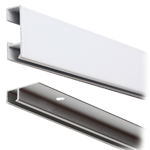
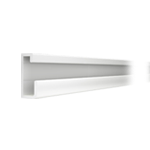
A track (or rail) is an aluminum channel that mounts to either the wall or ceiling and is the starting point of the art hanging system. This is the only part of the system that needs to be installed to your existing structure. Wall-mounted tracks typically handle more weight and can be easier to install, whereas ceiling-mounted tracks are best for “difficult” walls, like brick, concrete, glass, mirror, tile, wood, fabric, or wallpaper. Choosing the track will determine which hangers to use and how much weight can be supported.  It’s also important to keep in mind that in order to achieve the maximum weight capacity, the tracks should be properly installed based on the specific mounting conditions. Once the track is installed, you have the flexibility to add, remove, and adjust the hangers with ease and without ever having to make unnecessary holes in the wall. Systematic Art offers different styles of ceiling and wall-mounted tracks that can support between 75 to 250 lbs when properly installed.

SystematicArtTracks Art Hanging Systems 101

Wall-mounted and Ceiling-mounted Tracks by Systematic Art – Picture Hanging Systems

What’s a Hanger?

The hanger can be placed anywhere along the span of the rail and hangs vertically to suspend your art. Systematic Art offers 3 types of hangers: Rods, Cables, and Cable Rods.

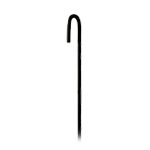
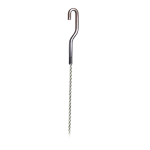
Rods are available in aluminum or stainless steel and are the most heavy-duty hanger option, capable of handling 70 to 100 lbs each. They also provide a more traditional and classic look, and are offered in various colors, lengths and styles.

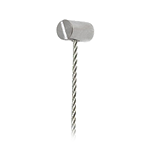
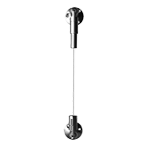
Cables are the most popular hanger option because they provide a very modern, industrial look and are least visible. We love using cables because they are durable, inconspicuous, and offer the most flexibility. Systematic Art’s cables are available in clear nylon, stainless steel, and a variety of colors. At less then 2 mm in diameter, the cables are barely noticeable, yet they can withstand anywhere from 15 to 40 lbs each and come anywhere from 4 to 20 feet in length. Cables offer the most flexibility since excess cable can easily be cut if not needed or neatly tucked behind the picture for later use. Also, cables can be easily rolled up and stored when not being used.

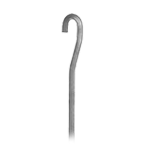
The Cable-Rod is a hanger alternative that is essentially a merger between our rod and cable.  Systematic Art designed this unique product for customers who want the sturdiness and rigidity of a rod, but love the discreet look of a cable with all the great hook and clamp options. The steel cable-rod can support up to 30 lbs and is available in multiple lengths and colors for any environment.

SystematicArtHangers Art Hanging Systems 101

Hanger Options by Systematic Art – Picture Hanging Systems

What’s an Art Hanging Hook?

The hook is used to attach art to the hanger and is fully adjustable along the length of the hanger.

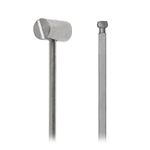
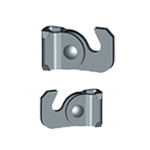
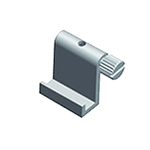
Rod hooks (or “Museum Hooks”) work with aluminum or stainless steel rods and are available in 3 styles: standard, heavy-duty, and with safety lock. All rod hooks attach to the rod by a self-locking cam action, making the hook easy to use and secure.

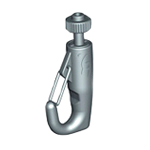
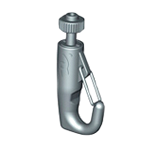
Cable hooks will work on both cables and cable-rods and are divided into two types: side screw or self-gripping. Side-screw hooks adjust by manually tightening or loosening a setscrew via a knob on the side of the hook. Self-gripping hooks are the easiest to use since they automatically grip the hanger via ball bearings inside the hook, allowing them to support the most weight.

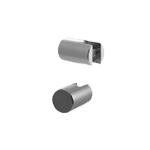
We wanted to also briefly mention that when using cables or cable-rods, hooks can be substituted with other accessories, such as clamps or tensioners, to suspend objects such as signs, panels, or other objects.

SystematicArtHooks Art Hanging Systems 101

A variety of rod and cable hooks by Systematic Art – Picture Hanging Systems

We hope you found this brief tutorial of Systematic Art’s picture hanging systems helpful and informative. You can see that putting together your own custom hanging system is easy.  We offer such a diverse range of tracks, hangers and hooks that you’re bound to find the system that’s perfect for you.   Please visit us at www.systematicart.com and check back with Systematic Art’s Blog often for more art hanging ideas and information.

Welcome To Systematic Art’s Blog: Your Hanging Resource

Thanks For Hanging With Us!

We’re very excited to launch this blog to provide you with useful and exciting information related to art, picture hanging, and beyond. We hope this blog will be a source of ideas and inspiration, as well as a place to engage and communicate with you.

Our Approach To Hanging Art

Our posts will cover a wide range of topics, such as featured products, inspirational installations, and tricks of the trade. We’ve encountered so many different installations over the years and can’t wait to share our wealth of industry experience and know-how with you.

We’ll especially focus on the advantages of using Systematic Art’s innovative picture hanging systems and other unique hardware to display art, photos, signage, shelving, and just about anything. We also plan on featuring our favorite installations directly from some of our most creative customers.

Our ultimate goal is to inspire you to enhance the spaces around you, whether commercial, professional, retail or residential. Systematic Art offers a wide selection of tracks, cables, rods, tension, and suspension systems to meet the challenges of almost any space. Our products allow users to easily hang, configure, and adjust their art in a modern and innovative way. Remember: there is never one “right” way to hang something, so don’t get hung up!

This blog will be updated regularly, so please check back often. We’d also love to hear from you on Facebook and Twitter.

Welcome to the art of hanging art…